American vs. German Cockroaches in North Carolina: How to Identify Them
You spot a cockroach in the kitchen and it disappears under the stove before you get a good look. Was it a big roach that wandered in from outside, or a small one that might have hundreds of relatives living in your cabinets? In North Carolina, the answer is usually one of two species: the American cockroach or the German cockroach.
The two look very different once you know what to check, and telling them apart matters, because they live in different places and need different solutions.
The Quick Answer: Size and Markings
If you only remember two things, make them these:
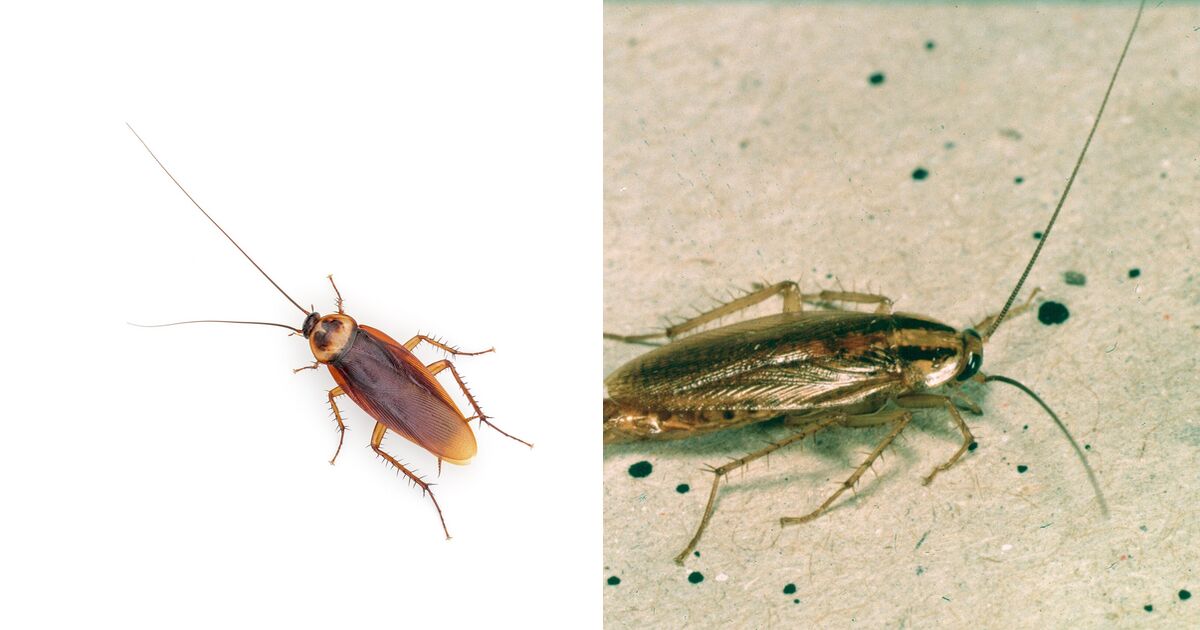
- Size: American cockroaches are big, about 1½ inches or longer. German cockroaches are small, rarely more than about ½ to ⅝ inch.
- Markings: Look at the shield-like plate just behind the head. German cockroaches have two dark, parallel stripes there. American cockroaches have a pale yellowish band around a reddish-brown center.
How to Identify an American Cockroach
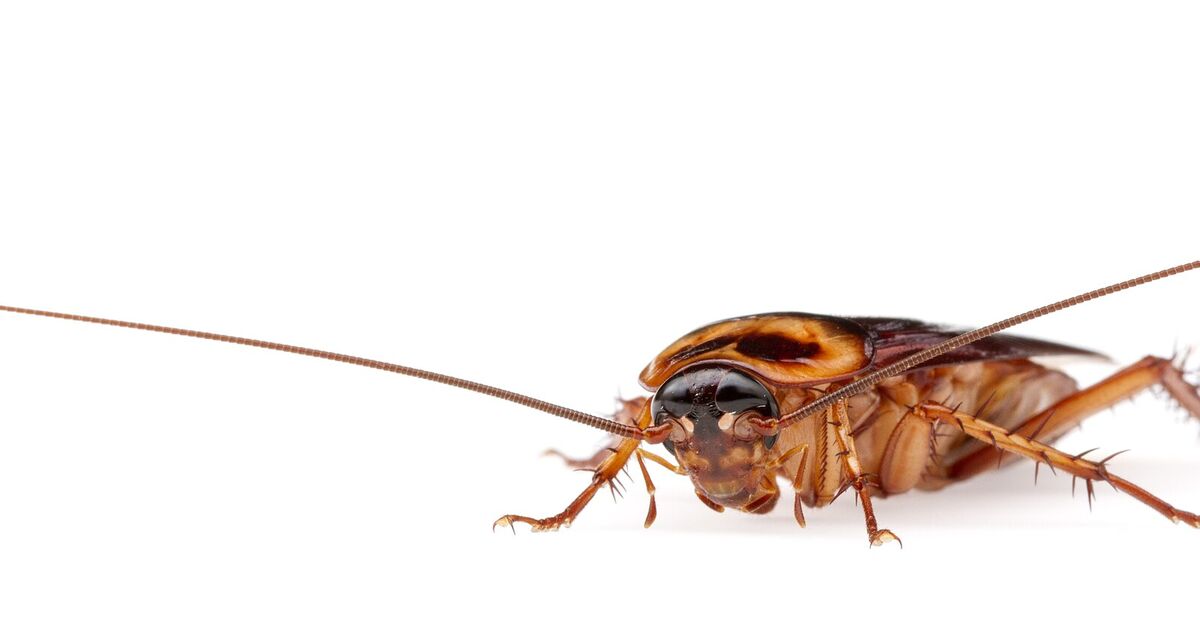
The American cockroach (Periplaneta americana) is the largest cockroach commonly found in homes. Many people around Pembroke, Lumberton, and the rest of Southeastern North Carolina call it a "palmetto bug" or "water bug," although those nicknames get used for other large roaches too.
Appearance
- Size: About 1½ inches or more as an adult
- Color: Shiny reddish-brown
- Head plate: Pale tan or yellowish band around the edge
- Wings: Full wings on adults, and they can glide short distances
- Antennae: Very long, often as long as the body
Where You'll Find Them
American cockroaches prefer warm, damp places and usually live outdoors or in sewers, crawlspaces, and drains. Indoors, they tend to show up in basements, garages, laundry rooms, bathrooms, and around floor drains.
Seeing one now and then usually means it wandered in. Seeing them often can point to a moisture problem, such as a damp crawlspace or leaking plumbing, or to gaps that make it easy for them to get inside.
How to Identify a German Cockroach
The German cockroach (Blattella germanica) is the most common cockroach living inside buildings. NC State Extension notes that it has adapted to live only indoors, close to people.
Appearance
- Size: About ½ to ⅝ inch as an adult
- Color: Light brown to tan
- Head plate: Two dark, parallel stripes, the giveaway feature
- Wings: Adults have wings but don't fly
- Nymphs: Young German cockroaches are smaller, darker, and wingless, often with a light stripe down the middle of the back
The Egg Case
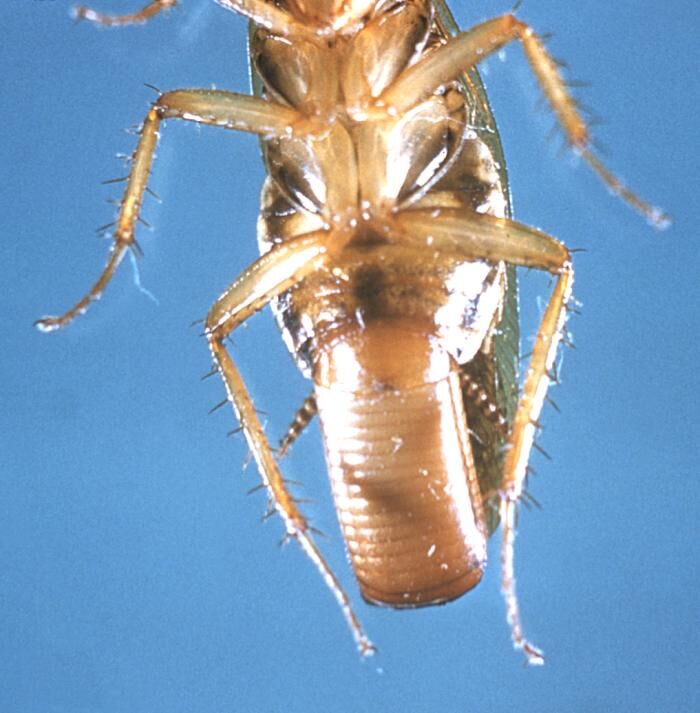
A female German cockroach carries her light brown, purse-shaped egg case attached to the end of her body until the eggs are almost ready to hatch. If you see a small roach with a tan capsule sticking out behind it, you're almost certainly looking at a German cockroach.
Where You'll Find Them
German cockroaches stay close to food, water, and warmth. Check:
- Under sinks and around plumbing
- Behind and under refrigerators, stoves, and dishwashers
- Inside cabinets, pantries, and drawers
- In and around microwaves, coffee makers, and toasters
- In bathroom cabinets
They usually arrive by hitchhiking in grocery bags, cardboard boxes, used appliances, and secondhand furniture, so a spotless home can still end up with them.
Side-by-Side Comparison
| Feature | American Cockroach | German Cockroach |
|---|---|---|
| Adult size | About 1½ inches or more | About ½ to ⅝ inch |
| Color | Reddish-brown | Light brown to tan |
| Behind the head | Pale yellowish band | Two dark parallel stripes |
| Flight | Can glide short distances | Does not fly |
| Usual location | Crawlspaces, drains, garages, outdoors | Kitchens, bathrooms, appliances |
| How they get in | Wander in from outside or through plumbing | Carried in on boxes, bags, used items |
Other Roaches You Might Confuse Them With
Two other cockroaches are common enough in North Carolina to cause mix-ups:
- Smokybrown cockroach: About the size of an American cockroach, but a uniform dark brown to mahogany with no pale band behind the head. It mostly lives outdoors in mulch, tree holes, and gutters.
- Woods cockroaches: Medium-sized brown roaches that live outdoors in leaf litter and woodpiles. NC State notes they sometimes come in on firewood or fly toward porch lights, but they have not been known to reproduce indoors.
Why Identification Matters
The species you find shapes the right response.
An American cockroach usually points to conditions outside or under the home: moisture, mulch or debris against the foundation, or gaps around pipes and doors. Fixing those conditions is a big part of keeping them out. If the crawlspace stays damp, our crawlspace remediation and moisture control services can help.
A German cockroach usually means a population is already living and breeding inside. NC State Extension notes that a newly hatched German cockroach can reach adulthood in about 40 days, so a few roaches can become many within months. NC State also advises against foggers ("bug bombs"), which don't reach the cracks where German cockroaches hide and can scatter them to new areas.
Not Sure What You're Seeing?
If you can, trap or photograph the roach so it can be identified. If you're finding German cockroaches, or roaches of any kind keep showing up, it's time for professional help.
Heritage Pest & Services provides German roach treatments and general pest control for homes and businesses across Robeson, Scotland, Hoke, Cumberland, and the surrounding counties of Southeastern North Carolina. Contact us for a free estimate, or call or text (910) 852-1384.
Sources
- NC State Extension: Biology and Behavior of the German Cockroach
- NC State Extension: German Cockroach Surveillance and Management
- NC State University: How Do I Get Rid of Cockroaches?
Featured image: American cockroach by Alex Wild, Insects Unlocked, University of Texas at Austin (public domain); German cockroach by Clemson University – USDA Cooperative Extension Slide Series, Bugwood.org (CC BY 3.0 US).